
- Iran
Norooz Dinner
Bidoun

Every year, during the two weeks on either side of the spring equinox, Iranians around the world participate in a series of celebrations for Norooz, the Persian New Year. On the eve of the New Year, families congregate for a traditional meal centered around a dish of white fish and herbed rice called sabzi polo mahi. Children put on their newest outfits and look forward to receiving gifts from their elders. In some families, parents put on bad pop music, twist their wrists around in the air, and gesticulate with their eyebrows, as Iranians are prone to do.
Like most pre-Islamic Persian traditions, Norooz is rife with symbolic gestures and associated objects. Traditionally, a table is set in the home featuring seven items that all begin with the Perso Arabic letter س (“seen”), each with a particular significance: sabzeh (germinating sprouts) for rebirth, samanu (wheat-germ pudding) for affluence, senjed (dried oleaster fruit) for love, seer (garlic) for health, somagh (sumac) for sunrise, and serkeh (vinegar) for patience. Today, most haft-seens boast far more accoutrements than the now passé original seven. Little goldfish swim about, coins ensure prosperity, and, depending on the family’s disposition, a Qur’an, Avesta, Bible, Torah, or good old-fashioned Divan of Hafez watches over the table’s constituents.
On the last Wednesday before Norooz, known as chahr shambeh soori, celebrants jump over bonfires in order to lose their woes of the past year in the rejuvenating life force of fire — a reoccurring theme in Zoroastrian traditions. Thirteen days after the new year, the revelry concludes with a climactic event called seezdah be dar, in which Iranians have occasion to engage in two of their favorite pastimes: gathering in large numbers in parks and, once again, eating copious amounts of delicious allegorical foods.
In commemoration of the Persian New Year, which falls on March 20 of this year, Bidoun presents recipes for a classic Norooz dinner for you to prepare with loved ones. Noroozetan Pirooz!
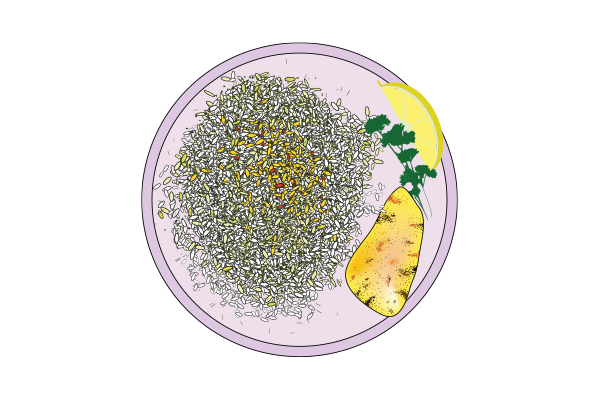
SABZI POLLO WITH MAHI
INGREDIENTSFOR THE SABZI POLLO:
3 cups basmati rice3 tablespoons salt1/3 cup vegetable oil3 cups finely chopped herbs from among the following:Fresh parsley, stemmed and rinsedPersian chives (Tareh), rinsedFresh cilantro, stemmed and rinsedFresh dill weed, stemmed and rinsedFresh fenugreek (Shanbelileh), stemmed and rinsed3 cloves garlic½ teaspoon ground cinnamon½ teaspoon ground cumin½ cup melted unsalted butter
FOR THE MAHI:3 pounds white fish fillet4 tablespoons all-purpose flour1 teaspoon ground saffronVegetable oil for fryingSalt and pepper to tasteLemon for garnish
FOR THE SABZI POLO:
Rinse the rice thoroughly in water. In a large bowl, combine the rice and salt and let it soak in water for 6 to 8 hours. Drain the water.
Bring a 6-quart pot, three-quarters full of water, to a boil over high heat. Add the rice. Reduce the heat to medium and boil gently, stirring occasionally, until most of the rice rises to the surface. Drain well and rinse with approximately 4 cups of warm water. Spread the vegetable oil on the bottom of the pot. Cover with one-third of the rice in a single layer. Spread one-third of the chopped herb and garlic mix over the rice and fluff them by hand to incorporate. Sprinkle cumin and cinnamon between the first and second layers.
Repeat this process twice.
Cover tightly, place over medium heat, and steam the rice for approximately 90 minutes. Mound the rice on a platter. Prior to serving, pour melted butter evenly over the top of the rice.
FOR THE MAHI:
Mix the saffron with half a cup of boiling water. Let it cool and then pour it over the fish. Lightly dust the fish with flour, salt, and pepper, then fry it in vegetable oil until golden-brown on both sides.
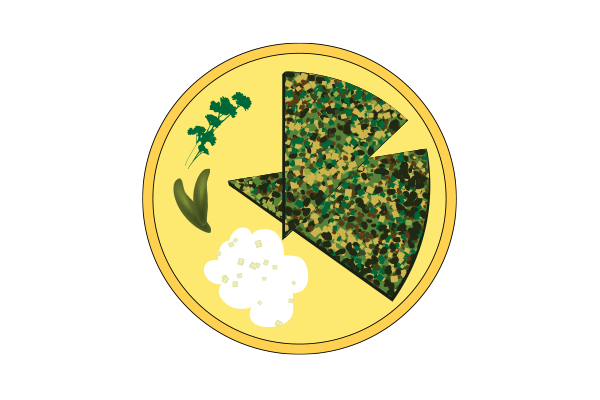
KUKU SABZI
INGREDIENTS:6 eggs3 cups finely chopped herbs from among the following:Fresh parsley, stemmed and rinsedPersian chives (“Tareh”), rinsedFresh cilantro, stemmed and rinsedFresh dill weed, stemmed and rinsedFresh fenugreek (“Shanbelileh”), stemmed and rinsedFresh spinach, rinsed3 cloves garlic½ cup coarsely chopped walnuts½ teaspoon ground turmericSalt and pepper to tasteVegetable oil for frying
In a large bowl, lightly beat the eggs. Add the flour, chopped herbs, walnuts, garlic, and spices.
Beat well until fluffy.
Heat the oil in a large frying pan, add the egg mixture, reduce the heat, and smooth it with the back of a spoon. Cover immediately and let it cook until it’s golden and springs back when touched. Flip it and continue to cook it uncovered until golden. Transfer it to paper towels to drain, then cut it into 8 pieces. Serve with yoghurt.
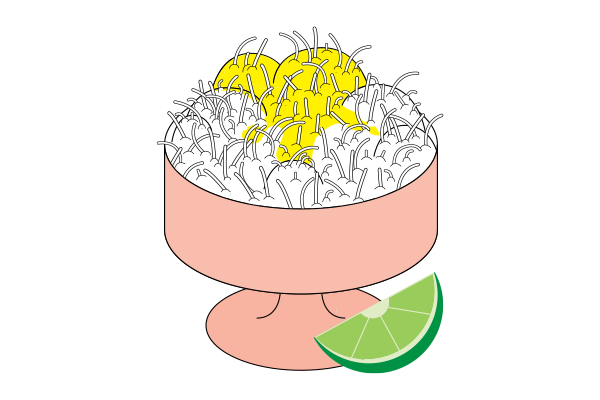
FALOUDEH
INGREDIENTS:2½ cups fine sugar1 cup water½ cup rosewaterCrushed iceVermicelli rice noodles, broken into 2-inch piecesGarnishes: pistachios, sour cherry syrup, fresh lime juice, mint
Boil the rice noodles for no more than 20 seconds. Remove the noodles, run under cold water, and set them aside. Combine the sugar, rosewater, and water in a pot and boil for approximately 5 minutes. Let cool. Working in batches in a blender, purée the crushed ice and chilled syrup. Transfer the mixture to a bowl and stir in the rice noodles. Garnish with fresh lime juice, sour cherry syrup, mint, or pistachios.