
Short Takes
Bidoun
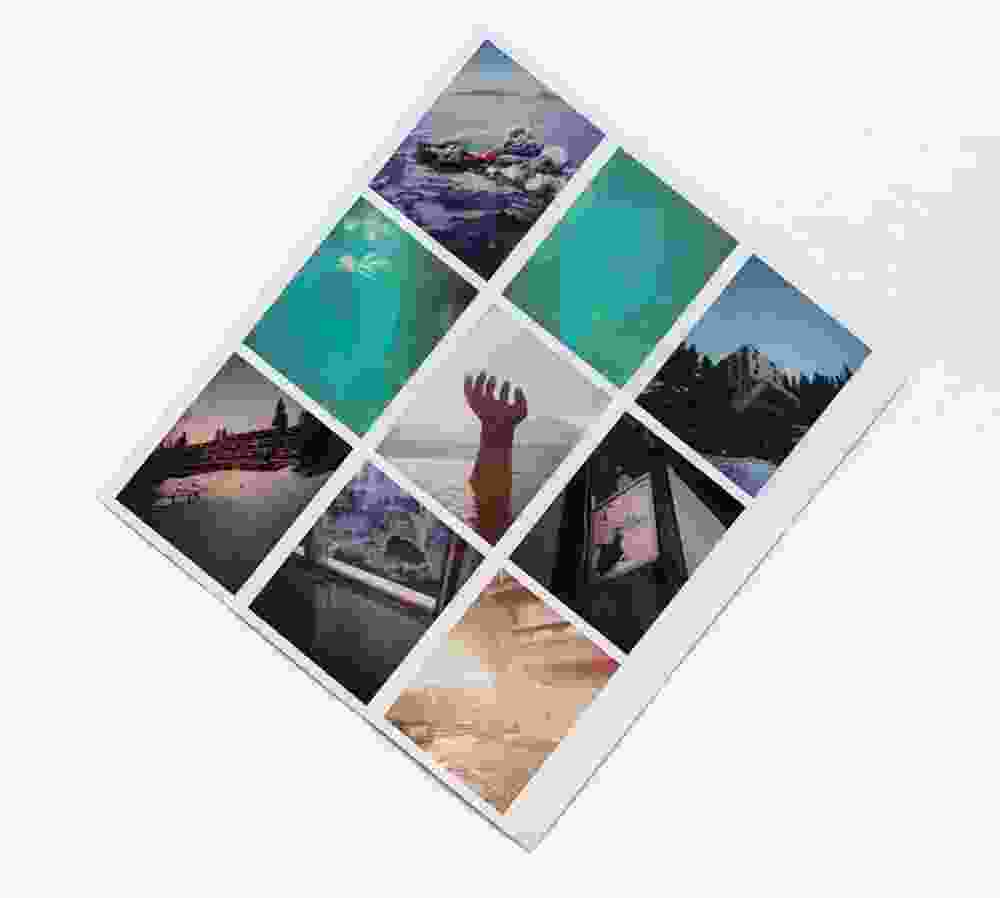
Cyprien Gaillard: Geographical AnalogiesEdited by Florence Derieux, Susanne Gaensheimer, Adam Szymczyk, Rein WolfsJRP|Ringier, 2010
“A world atlas against disappearance,” is how French artist Cyprien Gaillard describes his latest project, an appropriation of the (vanishing) medium of Polaroid photography in documenting diverse manifestations of disappearance and decay in the world around us. A compendium of nine-hundred rigorously classified Polaroids, Geographical Analogies recounts stories about devastated concrete landscapes and monuments, architectonic utopias, unfinished holiday resorts, and modernist high-rises, golf courses, and cemeteries. In his own way, Gaillard may temporarily halt the disintegration by freezing these moments in time. Still, it doesn’t take a genius to realize that the forever nature of the photograph is, in fact, an impossible dream.
Lapdogs of the Bourgeoisie: Class Hegemony in Contemporary ArtEdited by Nav Haq and Tirdad ZolghadrContributions by Charlotte Bydler, Neil Cummings, Annika Eriksson, Chris Evans, Liam Gillick, Nav Haq, San Keller, Hassan Khan, Erden Kosova, Dr. Suhail Malik, Marion von Osten, Natascha Sadr Haghighian, Dr. Malcolm Quinn, Tirdad ZolghadrSternberg, 2010
The ongoing collaborative project “Lapdogs of the Bourgeoisie” investigates the hopelessly complicated question of the role of class structure in the production and presentation of contemporary art. Why, the organizers wonder, has class hegemony been so terribly overlooked in the art world? Does socioeconomic status still define an artist’s career — and to what extent does the artist reflect or consolidate these hierarchies? Artists — Hassan Khan and Natascha Sadr Haghigian among them — offer up their own tastes, biases, privileges of access, and attendant anxieties for scrutiny, while San Keller photographs the homes of the artists’ parents — in which, invariably, their children’s artwork is proudly displayed.
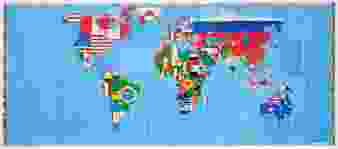
Alighiero E Boetti: MappaEdited by Anna FisherText by Jean-Christophe AmmannPublished with Gladstone Gallery, New YorkJRP|Ringier, 2010
Mappa compiles the embroidered maps of the world made by the late Italian artist Alighiero e Boetti (1940–1994), a leading light of Arte Povera who would later drift from the movement. Whether experienced as irreverent commentary on tropes of national self-definition or simply as sumptuous objects, Boetti’s graphic, color-blocked tapestries evoke the medieval tradition of the Mappa mundi. Compellingly, their very outlines were drawn by the changing geopolitical realities of his time — the Cold War and its diverse legacies. The maps themselves, elaborately woven, were made by artisans in Afghanistan and Pakistan, who were in turn free to dictate the scale, texture, and color of the work — in short, to dictate the experience of the work. “I did nothing for this work, chose nothing myself, in the sense that the world is shaped as it is, I did not draw it.”
Solution 186–195: Dubai DemocracyBy Ingo NiermannTranslated from the German by Gerrit JacksonSternberg, 2010
A campy riff on the culture of political and cultural critique, Berlin-based writer Ingo Niermann’s Solution series offers queer elixirs to social problems that are as pressing as they are unbelievable. He has, in the past, called for a radical re-vamping of the German language — or a “Rededeutsch.” He has, too, proposed that the world’s largest pyramid be built in Eastern Germany as a mass-burial site and tourist attraction. In this fifth book of the Solution series, Niermann takes Dubai as a modernist blank slate for urban renewal, reimagining it as the improbably named “Sugar World.” Sugar World, beyond being a global center for treating diabetes, has a population marked by saccharine kindness and is controlled by all manner of totalitarian advertising campaigns. Of course.