We’d been traveling for five months, following the pipelines from Texas to Iraq, via the Caucasus, the Caspian sea, Siberia, Central Asia and West Africa, trying to describe the new crude world order of countries in which the United States is seeking viable alternatives to Saudi Arabia.1 To illustrate our travelogue, we searched and found a variety of luscious, lip-smacking icons along the way. Texas wildcatters, Moscow oligarchs, child soldiers in Luanda, Baku belly-dancers, highwaymen in Tbilisi and African dictators. But this was more than we’d hoped for — imagine an old-school heavy metal band, greasy and hirsute, in the middle of Baba Gurgur’s oilfield, northern Iraq, against a stage backdrop of flames punctuating the oil fields.
In the offices of the North Oil Company, we found Americans in flowered shirts and beige bermudas, armed with Thuraya satellite telephones, walkie-talkies and Swiss pocketknives, installing Korean air conditioners in every room: these were men from Kellog, Brown & Root (KBR), a subsidiary of Dick Cheney’s old paycheck Halliburton, men responsible for bringing Iraqi crude production up to par.
All around their gigantic compound, Iraqi guards watched on, wearing US nametags indicating their age, height and weight. They all had long hair, coiled up under their caps.
“Are you Sufi?” we asked.
“Well, actually, yes. How did you guess?”
It was the hair. Uncoiled and shaken — headbanged — during mystic dance sessions, their coiffure embodies the bond between Earth and Heaven, man and God. Most of the guards were members of the Kasnazani order, mainly a Kurdish affair, established under 12th-century Iraqi mystic Abdul-Qader Ghilani (1088–1166), whose influence spread from Istanbul to Delhi. The day we met happened to be a Thursday, the day of the Kasnazani regular meetings. “Be our guests this evening, in the gardens of the Sheik,” one of them said, before politely asking us to leave; it generally isn’t safe hanging around premises that are the regular target of rebel attacks.
There are two types of Sufis. On the one hand, there are the intellectuals, the poets, who read 13th-century Iranian poet Rumi with a blend of ecstasy and academic pedantry. On the other hand there are the brutes. Perhaps a difference comparable to that between the Republican Party and the armed rednecks haunting the woods of the Bible Belt. Or, alternatively, the one dividing the Basque independence movement, which includes both the Batasuna party, with their press conferences and their search for political recognition, and ETA, the brutes with bombs.
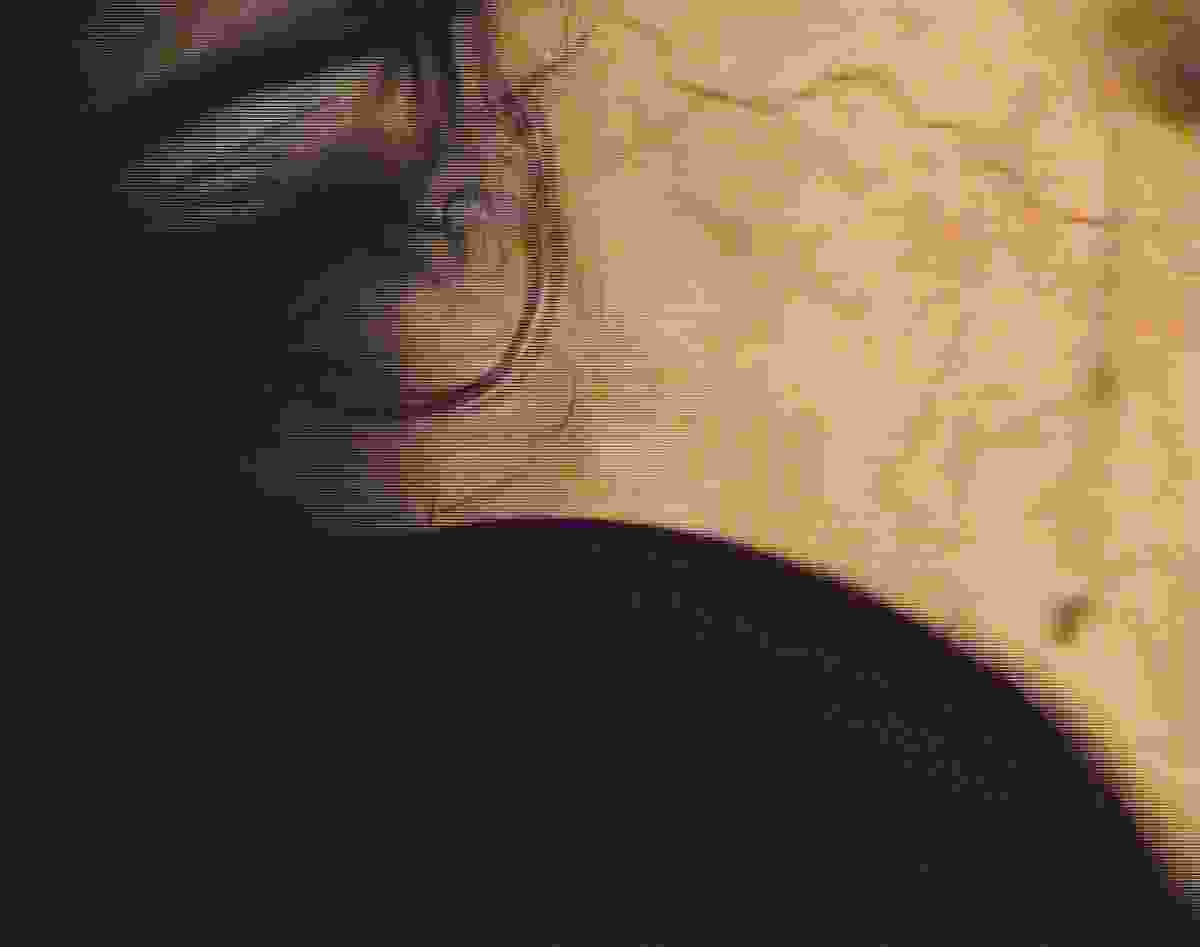
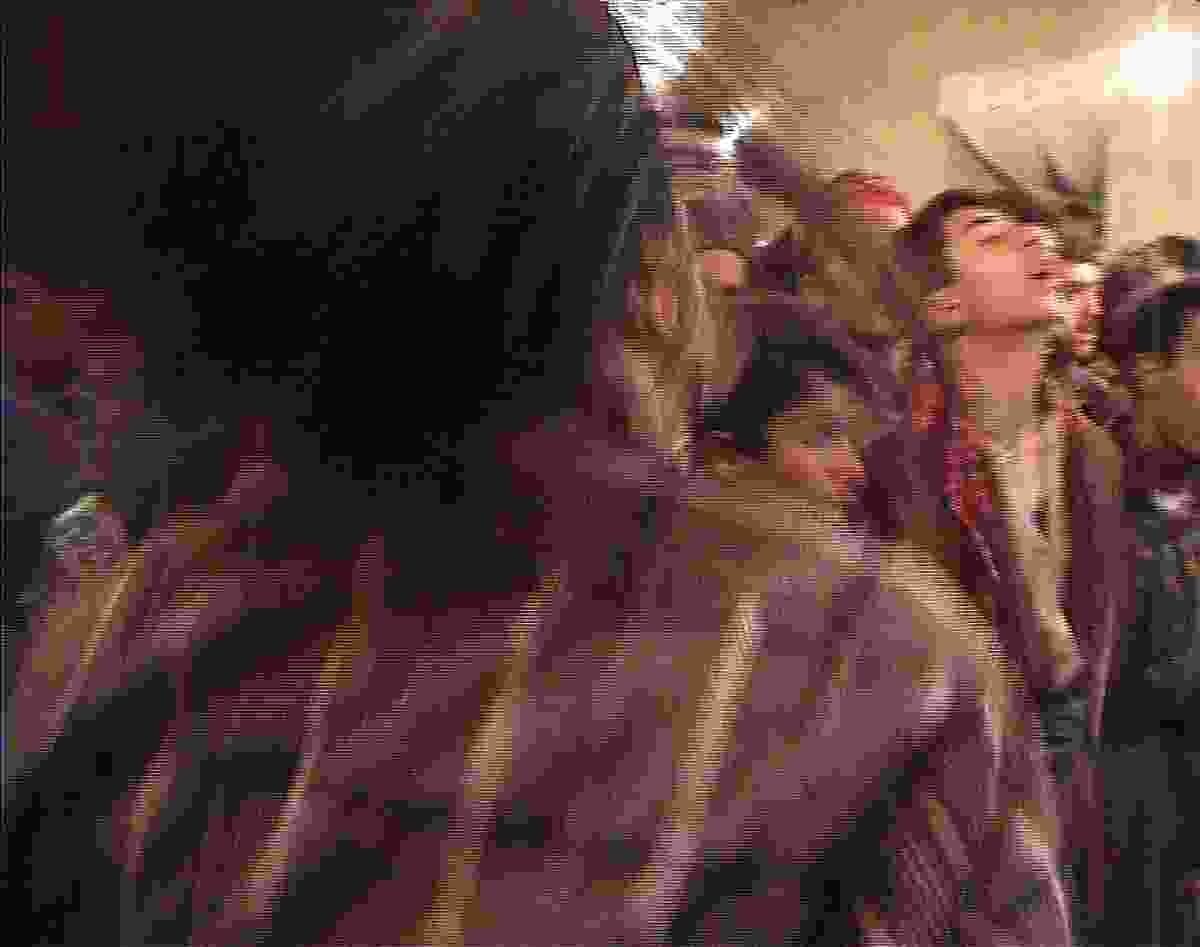
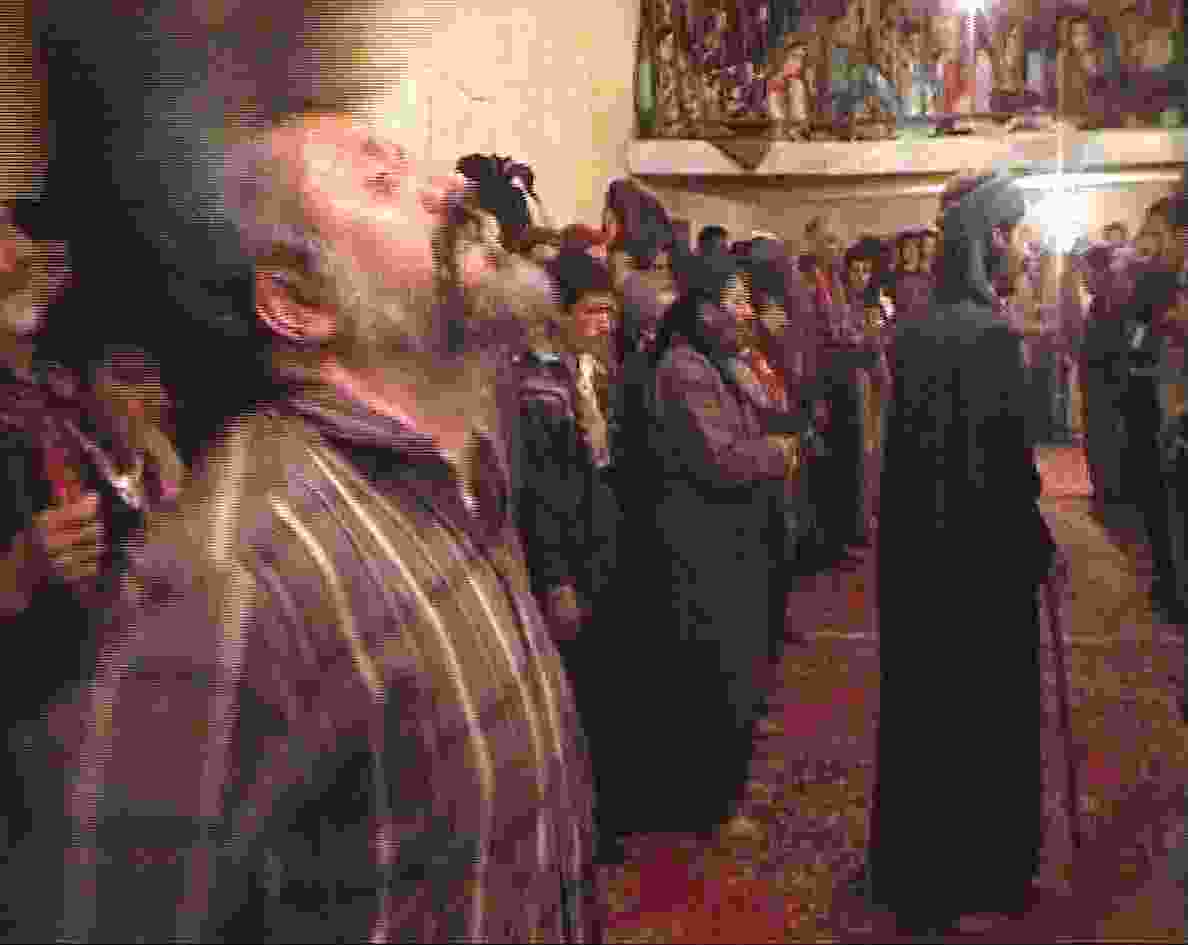
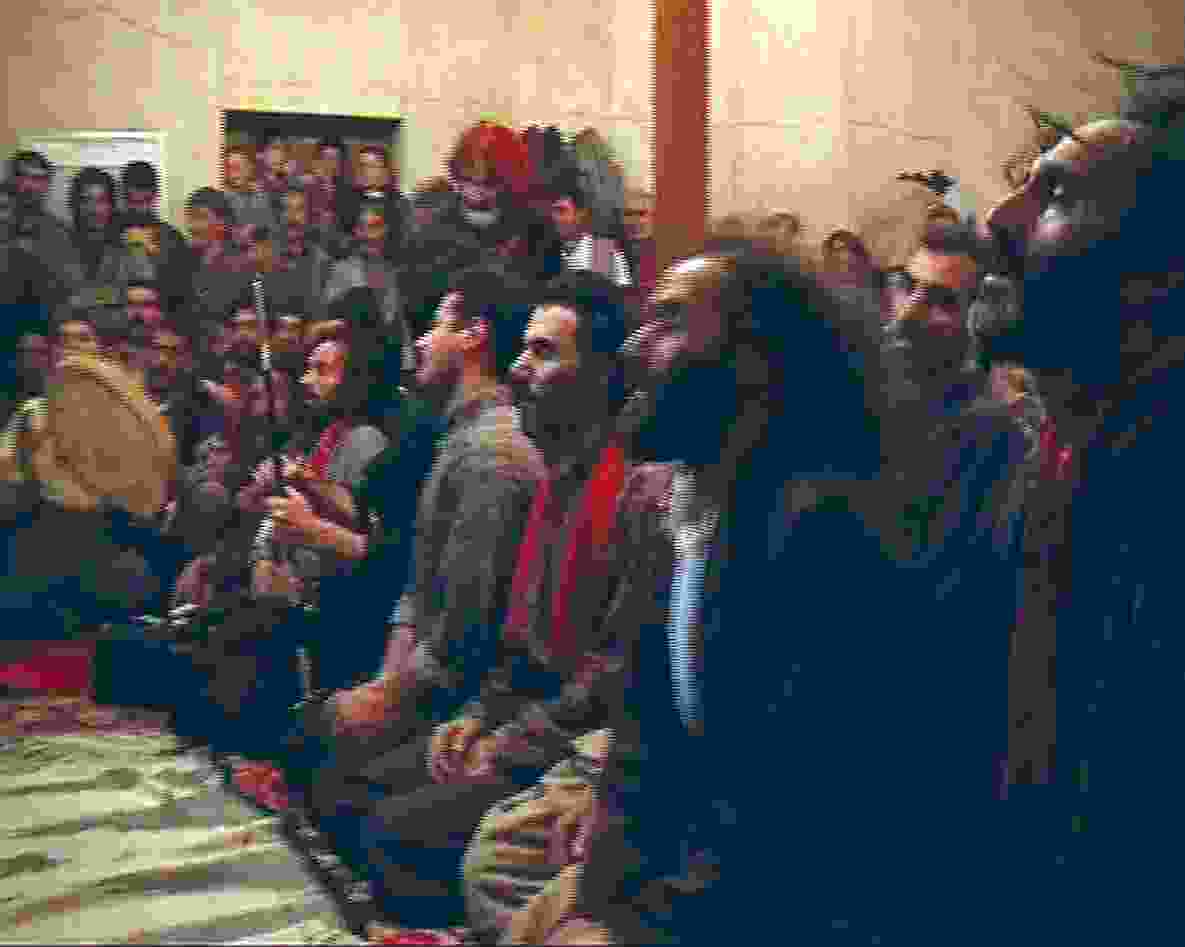
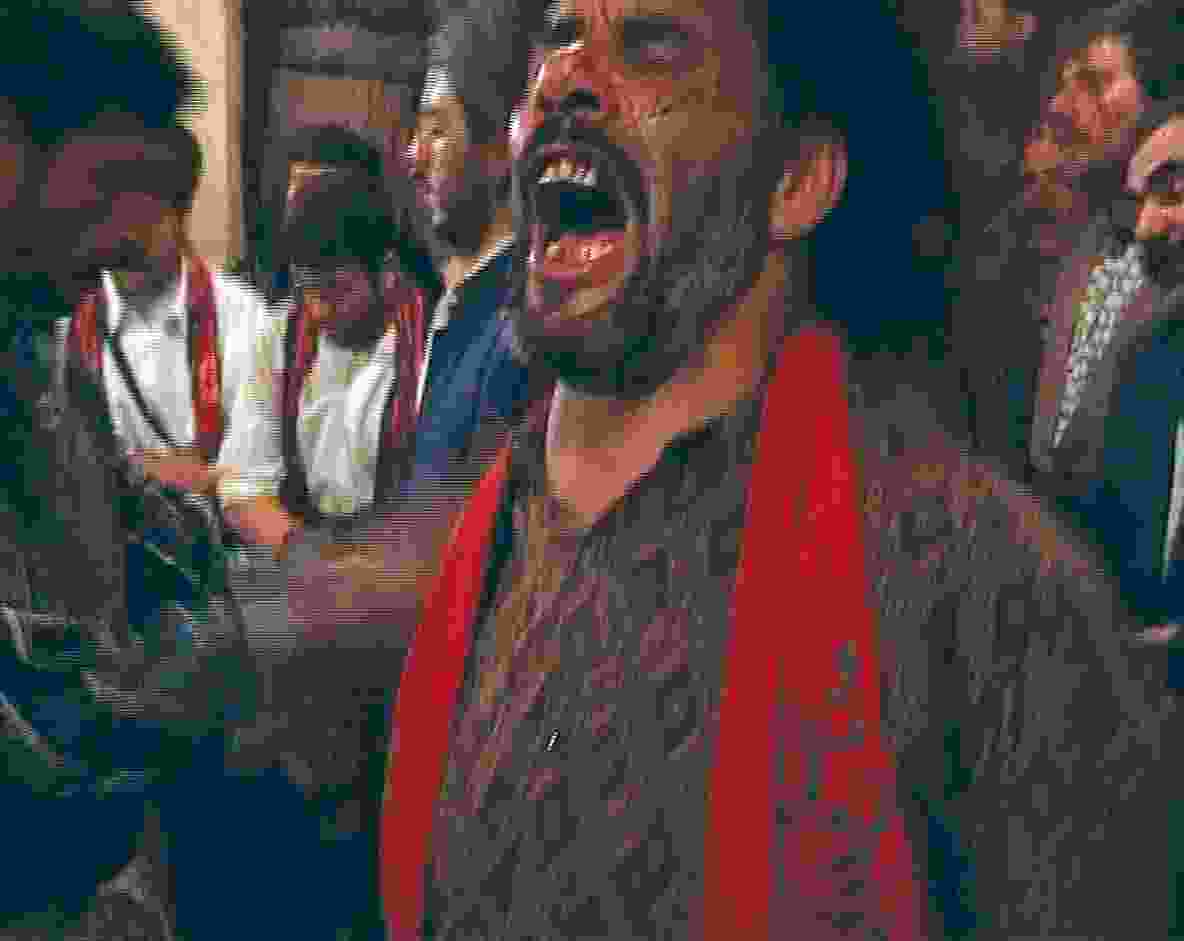
The cab driver that evening was clinging to his gun, as terrified as we were of having to drive at night for the first time since the city had surrendered, plunging it into chaos. We got lost, driving past the citadel of Kirkuk three times before arriving there over an hour late. The dervishes (regular members of a brotherhood) were already well into their recital of la ellaha ell’ Allah (there is no other God but Allah), a ceremony that all mystic brotherhoods practice, with the ultimate aim of reaching a trance-like state. The long-haired men were pouncing to and fro to the rhythm of the drums, surprisingly reminiscent of Angus Young on a good night. When he had considered that the congregation had had enough warm-up, the master of ceremony’s assistant opened a kit revealing an impressive array of cheap cutlery and neon light bulbs.
Dervish Fikrad, a scrawny twenty-year-old, started things by breaking off the metallic fuse of a 1.20 meter fluorescent tube, swallowing the rest as if it were spaghettini. In the silence that followed, everyone could hear him chewing on the glass, while a small dribble of blood ran down his chin until his mouth was indeed completely empty. This managed to put everyone in a jubilant mood. The old dervish Khatib started lacerating his tongue with two daggers, as if he were sharpening them. A cloud of blood and drool began to spray from his mouth.
Next in the lineup was Momad Vlahieh, with his cheerful, cherubic face. Using a Kalashnikov cartridge as a hammer, the master of ceremonies nailed three daggers into his skull. Wearing this rather daring and idiosyncratic headdress, Vlahieh started dancing across the room. “Hey foreigner, come pull them out!” the caliph shouted in my direction. The congregation was already giggling, knowing what would follow. We each grabbed a dagger and pulled hard. Nothing. The blade was, quite simply, stuck in the dervish’s head. “That’s perfectly normal,” we were told, “you need God’s help for this sort of thing.” He shouted “Allah!” and released the knives with a small tug. For this particular redneck brand of Sufism, these entertaining stunts prove the existence of God, and are used to recruit new followers.
An interview was scheduled for the following day at 7:30 am, with two representatives of the occupying army. Major Joe Hanus was in charge, along with John Cox of the US Army Corps of Engineers. Both were charged with restoring Iraqi oil production to prewar levels. Hanus had no intention of giving us any relevant information whatsoever, and simply handed us a booklet that, he assured us, “will be very useful.” Within, we read that his team was the “best in the world,” that there is “no mission they can’t carry out” and that they are incidentally “a strategic partner of the army and the nation to fight terrorism at home and abroad.”
“Major, those people you employ to watch the oilfields, do you know how they spend their Thursday evenings?”
“Err, I think they have religious meetings or something.”
“They’re Sufis.”
“Yeah, someone told me, a bunch of fanatics. But they’re extremely efficient at keeping the site secured. Everyone’s happy.”
“Not fanatics, Major, mystics. In order to prove the existence of God, they accomplish miracles, such as planting knives in their—”
“Don’t tell me that!” he interrupts us with a high-pitched voice. “I don’t want to know any of this. It’s disgusting!”
“No, it’s just like the fakirs, they swallow—”
“Don’t tell me that! Don’t tell me that!” shouted the timorous and sensitive major, whose army, according to recent statistics, has caused the death of some 100,000 people during the course of its invasion and occupation of Iraq.2
1 This journey was documented in a publication entitled Un monde de brut (A crude world), published by éditions du Seuil in Paris.
2 A study published on October 29th 2004 in the British medical journal The Lancet estimates that 100,000 civilians have died in Iraq as a direct or indirect consequence of the March 2003 United States–led invasion. The article is based on a new study carried out by a research team at the Bloomberg School of Public Health at Johns Hopkins University in Baltimore.
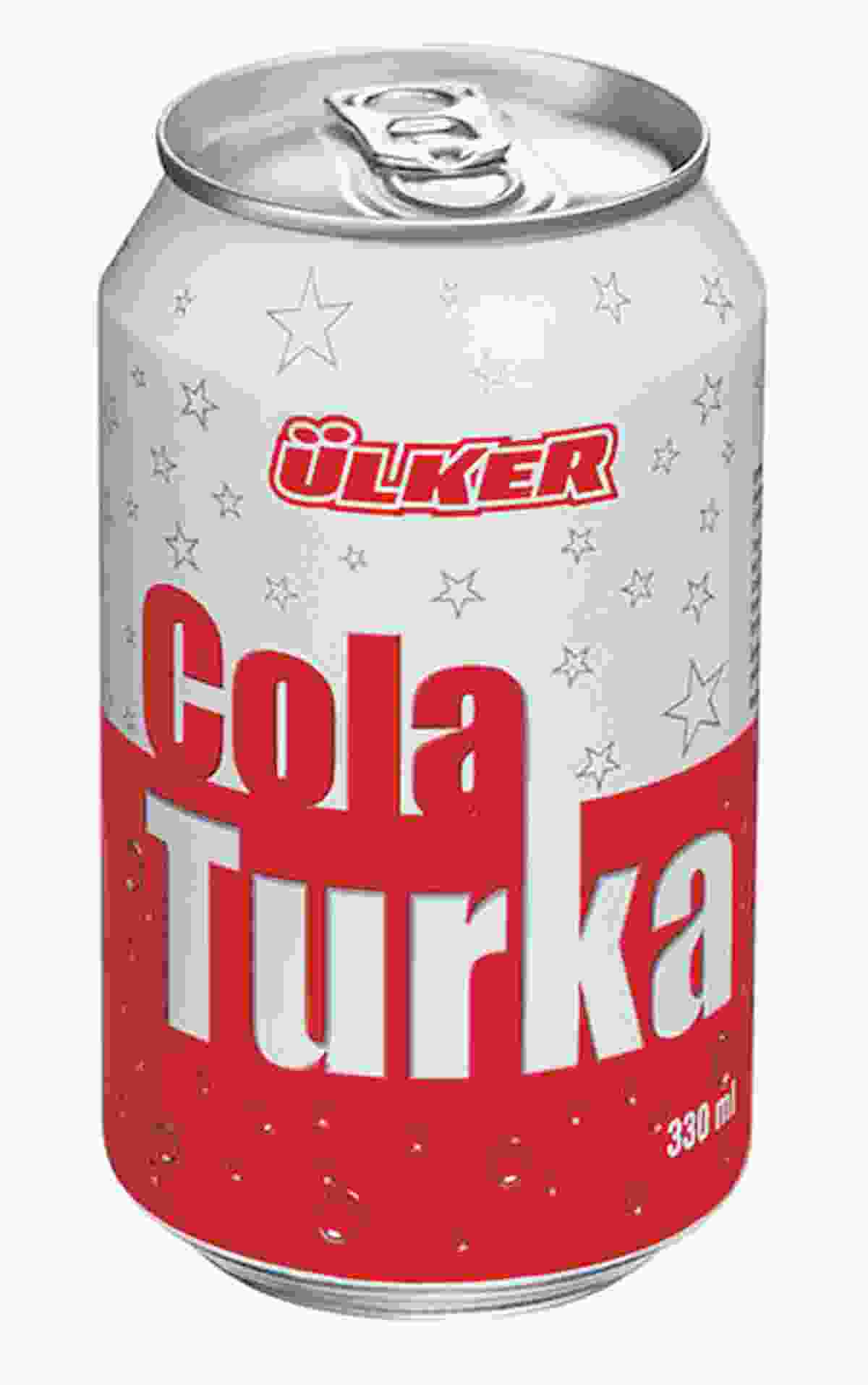
In the summer of 2003 a Turkish food conglomerate, Ülker, launched a high-profile advertising campaign for a new product: Cola Turka. In the first TV ad for the product, we watched wholesome Chevy Chase, whose everyday New York City morning turns very strange as he chats in a diner with David Brown. Looking decidedly Texan, complete with cowboy hat, Brown is drinking Cola Turka — which compels him to fuse Turkish phrases into the otherwise English conversation with Turkish subtitles. Cola Turka has Turkified even his general attitude, we understand later, when he insists on paying for Chase’s coffee with an authoritative “Bendensin!” (It’s on me) and further agitates him by embracing him and kissing him goodbye on both cheeks. Awkwardness ensues in the second part of the ad, now awash in Turkish gesticulation and language. But a tolerant Chase, never a coward when it comes to new cultural frontiers, resolves the dramatic tension by taking a sip of this Cola Turka. He immediately grows a thick mustache.
As this fantasy of a cultural hegemony in reverse (the jingle for the ad goes “Oh when they drink the Cola that is Turka / there will be America no longer, it will be Turkafied / We drank the Cola that is Turka / that famous American dream is now Turkafied”) proved extremely popular among the Turks, the ads started to become somewhat tedious and repetitive, but still, anxious to please. In May of 2004, those behind the campaign decided to mobilize the demos via interactive technology, by appealing to the national religion of soccer and, again, to the mustache. This time, the TV ad featured Pierre Van Hooijdonk, a Dutch soccer player currently on a major Turkish team, training for the UEFA Euro 2004 Portugal. With each sip of Cola Turka he takes in between his free-kicks, Pierre grows a different style of “Turkish” mustache: first a very thick one with sharp ends (associated, in the Turkish collective memory with the warrior/nomadic ancestors of the race); then Ayhan style (a major actor of Turkish Cinema in the 50s, 60s and 70s) — well trimmed, short and narrow; Camoka style (the evil villain of a popular 60s comic strip) — a thin crescent that grows down to the chin; and finally no mustache at all (an explanation is offered to dispel our doubts as to the virility of the brand: that last sip was from a can of Diet Cola Turka). The ad calls on the Turkish audience to vote via an SMS message for the best of these four looks, promising that the mustache chosen by the Turkish people will be the mustache that Hooijdonk wears to Euro 2004. Insignificant note: Turkey had failed to qualify for Euro 2004. A later ad informed us that the people had spoken, and much to Hooijdonk’s disappointment, they had spoken (with a 35 percent vote) for no mustache. Was this the refusal to bestow precious Turkishness upon Pierre; was it the rejection of mustache as a viable Turkifier; or was it the articulation of the desire for a smooth, razor-fresh, hairless new face for Turkey?
Softly she then parts her féradje (coat) and offers herself entirely as prey to my gaze. I saw her angelic body as white as camphor or virgin wax; then, continuing my inspection downward, I admired her secret recess with gracefully rounded hare’s lips, and, for greater pleasure still, absolutely free of any down. For starkness one could have hardly better compared her than to crystal or to the [eye] of the phoenix; in the middle, a cleft, due to the steady and infallible penknife of the Creator, divided it into two parts.
—Anonymous1
In her landmark essay “The Body as Inscriptive Surface” (1994), Elizabeth Grosz has argued that various corporal practices — ranging from tattoos, piercing, and scarification, to dieting, exercise, manners, and fashion — “mark the body as a public, collective, social category, in modes of inclusion or membership.” In other words, she suggests that the body is transformed by these practices and infused with meanings and values consonant with societal norms; it is socialized, endowed with identity, and labeled as belonging to a particular community.
Islam prescribes a number of such practices, notably in a Hadith narrated by Abū Hurayra according to which the Prophet said “Five things are in accordance with al-Fitra: to be circumcised, to shave the pelvic region, to pull out the hair of the armpits, to cut short the mustaches, and to clip the nails.” In addition, different Muslim societies engage in a variety of practices not necessarily stipulated by religion, such as the application of henna to the hands and feet, and the dyeing of eyelids with kohl.
Personal grooming habits like these, especially as they apply to women, greatly preoccupied European travelers and orientalist writers. However, while these habits acted to bind together the communities that practiced them, for westerners they were markers of “otherness” — always narrated in the third person, and always from a distance that simultaneously betrayed both fascination and repulsion. They were nothing less than tools with which to construct difference. Thus, James Dallaway wrote in his Constantinople Ancient and Modern (1797) that Turks “have a custom… of drawing a black line with a mixture of powder of antimony and oil, called Surmèh, above and under the eyelashes, in order to give the eye more fire… The nails both of the fingers and feet are always stained of a rose color. Such is the taste of Asiatics” (emphasis added).
Such testimonials go back several centuries. Luigi Bassano da Zara wrote in I Costumi et i Modi Particolari de la Vita de Turchi (1545) that Turks “like the hair black, and she whom nature has not so endowed resorts to trickery, so that when it is blond, or white from old age, they dye it red with Archenda, which they call Chnà, with which they dye their pony tails; with the same medicine they dye their nails, many dye their entire hands, some their feet, but in the form of the shoe; there are some who also dye their pubic hair and four fingers above it; and they make the hair fall out because they consider it a sin to have hair in the secret parts.” Likewise, in his Voyage dans la Haute et Basse Égypte (1799), Charles Nicholas Sigisbert Sonnini de Manoncourt described in painful detail how women “are unmercifully stripped of the veil of nature” since they are “anxious to preserve over their whole bodies an exact and uniform polish.” It is very difficult not to interpret the emphatic and repeated use of the pronoun “they” in these accounts as a statement of difference: the modes of personal hygiene and grooming practiced by — or ascribed to — the women of the “Orient” thus worked to set them apart in the western imagination. To use a Foucauldian term, they were technologies of alterity.
Travelers were not the only ones to dwell upon the topic of depilation. In an interesting and voluminous pseudo-anthropological book entitled Medizin, Aberglaube und Geschlechtsleben in der Türkei (1903), Bernhard Stern wrote that “on the day before her marriage, the Fellah bride in Syria takes the greatest care of her body. Accompanied by friends and relatives she goes to the bath. There she is washed, scrubbed, rouged, and decorated. It is an important duty of the friends with the aid of a plaster made of honey and other ingredients to rip all the hair from the body of the bride — she becomes smooth and shiny, like a small immature girl.” Similarly, Stern goes on to note that in Egypt, “several days before the wedding the bride takes a bath. On a fixed evening she comes together with her friends and they remove the hair from every part of her body except her head; for this they need a sticky semi-fluid resin, which they pour on the hair which is to be removed, and after it cools, they tear it off violently with the hair.”
Evidently the topic of hygiene and personal grooming in the “Orient” was often eroticized, even in fairly clinical accounts such as Stern’s. But some writers were quite a bit more explicit in their efforts to titillate their audience; John Richards wrote in 1699 that “upon solemn occasions, when a virgin does prepare herself for her husband’s bed, they make a feast in the baths to which they invite their friends, at which time she takes off the hair of her body, which she never does before, and is always practiced afterwards in these hot countries. With how much modesty this is done I cannot tell” (emphasis added). Substituting innuendo for fact, Richards made sure at least to plant the seed of doubt in his reader’s mind as to the sexual nature of the custom. Such preoccupation with the removal of body hair, incidentally, gains particular significance when one considers that eighteenth- and nineteenth-century mainstream pornography in Europe generally tended to emphasize a thick growth of pubic hair. Waxed or clean-shaven genitals, which have become relatively mainstream these days in the West, were still very much an exotic curiosity as recently as a decade or two ago.
In her essay “The Fiction of Fiction” (1973), Susan Koppelman Cornillon describes the centrality of the grooming rituals of depilating “legs, armpits, chests, chins, cheeks, upper lips, and eyebrows” to the lives of American women, noting “and yet, with all this that attaches itself to female leg-shaving slavery, I have never seen any fictional female character either shave or pluck a hair.” She is making the point that the “real” lives of women are not always reflected in their literary representation, and that is no doubt correct. In contrast to western fiction set in the West, however, western accounts of “oriental” women are replete with descriptions of grooming practices, including depilation, precisely because such practices were part and parcel of what made them different. The hammam was portrayed as the nucleus of an empire of the senses, and the women who languorously whiled away their hours there as preoccupied, indeed obsessed, with their bodies and with sex.
In part, this rhetoric served the important purpose of constructing the European self by projecting onto others those qualities that the rising western middle classes disavowed, such as sensuality, luxury, and self-indulgence. At the same time, however, it bolstered colonialism by portraying Europe’s “others” as incapable of ruling themselves. As Lewis Wurgaft writes of the British in The Imperial Imagination (1983), while the European bourgeoisie regarded itself as “the incarnation of austerity, courage, and self-control,” the natives overseas “were caricatured to an increasing extent as their emotional opposites, and as captives of a constitutional weakness for emotional excess and moral depravity. Such moral shortcomings were said to reflect the inroads of centuries of breeding and climate, and were not amenable to simple legislative or educational remedies.” It is not hard to see how this reasoning led directly to the conclusion that colonial rule was necessary and inevitable.
From smooth pubes to colonialism — is this just another case of abstract theorizing run amok? Not necessarily. Colonialism was not just spatial appropriation, military coercion, and economic exploitation; it was also imagination, narration, and interpellation. In an age when ideas like “liberty, equality, fraternity” were taking root, the unadulterated evil of colonialism needed to be legitimated in one way or another. Constructing an unbridgeable chasm between colonizer and colonized was but one element of that legitimation process, and sexual difference but one aspect of that unbridgeable chasm.
Anonymous, Le Livre de volupté (Bah Nameh). Translated by Abdul-Haqq Efendi (Brussels: Jules Gay, c. 1878–79).
Masoud Golsorkhi, founder and editor in chief of Tank teaches Lisa Farjam a thing or two.
Bidoun: Why Tank? Do you think one-name magazines are better than others?
Masoud Golsorkhi: I was looking for a four-letter word. English has a tradition of having very effective four letter words.
Bidoun: I can think of a few right off the top of my head.
MG: It also refers to think tank, tank as a container, but it also one of those words that actually has no translation — it means the same thing all over the world.
Bidoun: Our issues are themed around a central topic. This issue is themed around hair. And so I wanted to ask you a few questions related to hair.
MG: Well, I’m very pro-hair, so that’s fine with me.
Bidoun: Great. What was your hair like as a child?
MG: I had very straight black hair, like most Iranian boys. But when I hit puberty, it all went very curly. It made me very unpopular. You know, in Iran, there is a slight prejudice. If you look too much like an Arab, it’s not such a good thing. People used to call me “the Arab.”
Bidoun: Who is the biggest hair icon in the Middle East?
MG: All I can think of is Googoosh. Before Madonna, before postmodernism, she was so capable of reinvention and reinterpretation.
Bidoun: What would you consider the ugliest thing on earth?
MG: I have to say I can’t think of anything uglier than the Rumsfeld, Cheney, neo-con militarist #*$! that’s in power in America at the moment. They are the biggest threat to survival of humankind, and to peace, safety and security to most people in the world. They are the ugliest thing since the Cold War, since the Gulag and Stalin.
Bidoun: Agreed. Why all the hair in the last issue? Do you have spies infiltrating other magazine enterprises?
MG: Well, facial hair has been a kind of feature for the last couple of years — we did a big feature on mustaches a while ago, an article which took me almost a year to write because the first idea came up as I was listening to a radio program about Turkey, and it was a kind of small line in it which said that in Turkey you can always tell someone’s politics by the shape of their mustache! I thought that was kind of true, so, there it is.
And as for the Cousin It shoot, well, that is my daughter, she’s a bit of a gremlin, a bit of a monster… but there is of course the pun on It girls, and so on… I haven’t had more compliments on a shoot in Tank than this one for about 5 years…
Bidoun: What does it take to make “it” in your opinion? Besides good hair?
MG: I think in almost any area, ambition. You need good hair, and ambition. Ambition will get you further than almost any other quality I can think of.
Bidoun: What was your favorite issue to make?
MG: It's always the next one. I really enjoyed making “Arabica” in ’98, because people just didn’t understand, they thought we were sponsored by a coffee company, there was a real degree of bafflement. That was a landmark issue because we worked on the theme. And I am very proud with the issue before last, with the Prada cover — I really loved that one.
Bidoun: Are you hairy deep down?
MG: No, I’m more hairy on the outside than on the inside. People think I am quite fearsome, but I am an absolute pussycat.
Bidoun: What advice would you give me at Bidoun as a starting magazine?
MG: First of all, I enormously admire what you have done so far. I love the look of the magazine so far, and I would just advise you to be more ambitious than you thought to be and don’t be afraid of approaching things that you think are bigger than you. In school, or in prison, you need to pick a fight with someone to make a name for yourself. Pick a fight with someone twice as big as yourself. Because whatever happens, you will always win.
Just be shamelessly ambitious, and don’t listen to anyone else. It’s always better to make a coherent, strong mistake, than a bland, run-of-the-mill product that “pleases” everybody.
Bidoun: Do you ever wish that you had done it differently? Did Tank come out as you imagined it?
MG: I suppose when you imagine it as always a collective effort, where everyone gets along all the time... but I guess I never imagined it would last… I think in the beginning there was tremendous support from everyone, but as soon as we kind of showed that we were here to stay, people were a little less helpful…
Bidoun: Would you ever consider having a column in our magazine? Defect and work with us?
MG: Well, um… I am very honored... how ’bout next issue?
Hashem El Madani, Two Syrians, Pro-Palestinian resistance. Studio Shehrazade. Collection FAI
LondonHashem El Madani: MediterraneanThe Photographers’ GalleryOctober 14–November 28, 2004
A successful portrait photograph often reveals what the sitter actually wants to think of him or herself. August Sander’s early twentieth-century mission to document the population of Germany, for instance, might now seem unthinkably grand and simplistic, but a cursory look again at his photographs reminds us how full and revealing the representation of the steady gaze can be. Having photographed the residents of Saida for the past fifty years, Hashem El Madani has amassed a collection of over 75,000 images representing around ninety percent of the population of that city in the south of Lebanon. This project — on show for the first time outside Lebanon — may not have originated out of Sander’s lofty ideals, but makes for an exhibition that is equally revealing nonetheless.
Think how much people use photographs to instantly portray what they are, what they do; we live in a more immediately retrospective time than ever, using our mobile phone cameras to document even the most apparently meaningless moments. This exhibition shows the universal need people have to construct themselves. Madani seems to be the most selfless of photographers; he insists that photography is a service profession and that a portrait must render its subject beautiful, reducing full-faced people with a sharper angle, allowing crossed eyes to be either retouched or at least hidden. This is not about lies; it is in fact about the “truth” that people want to present about each other, to each other.
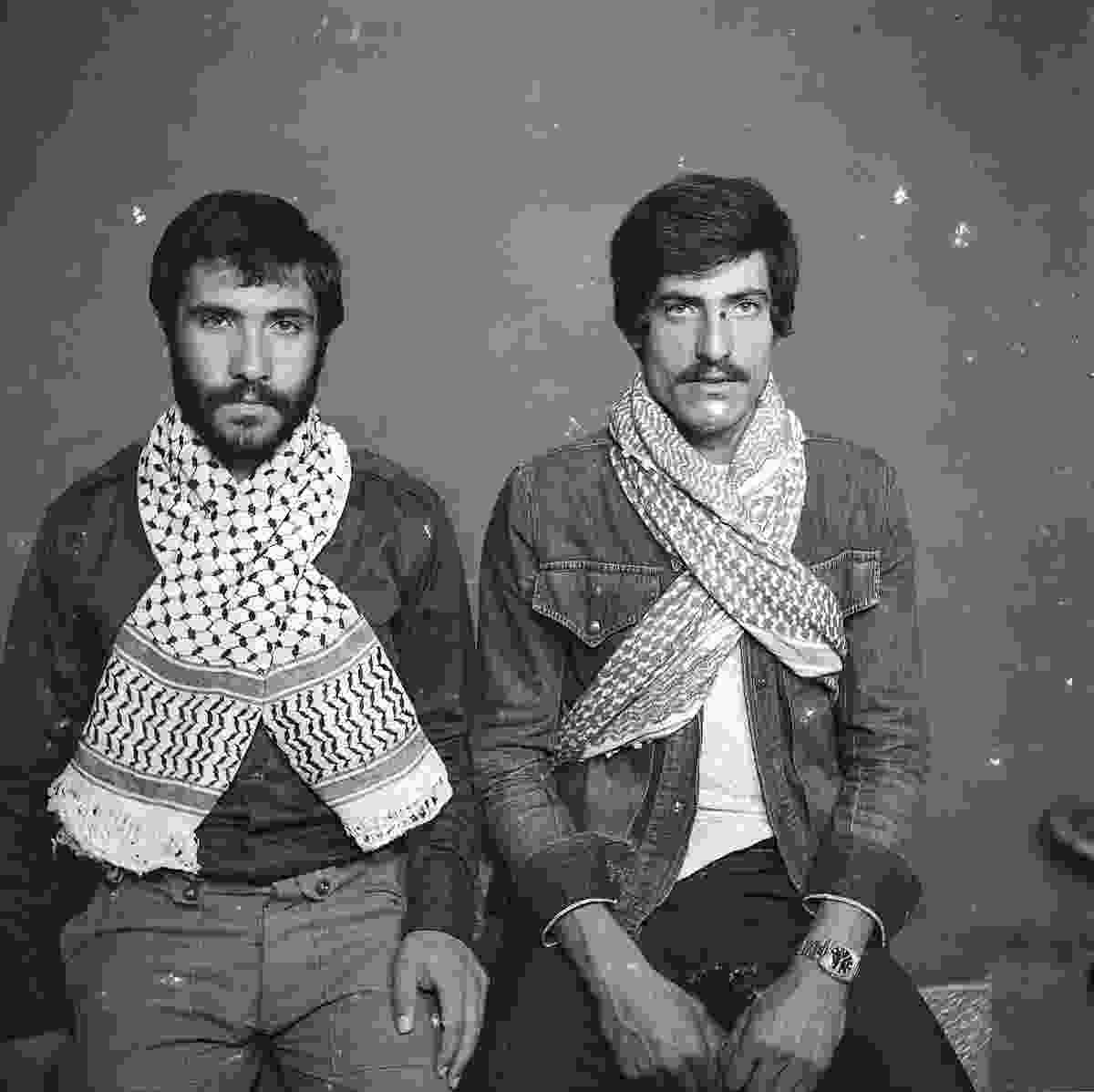
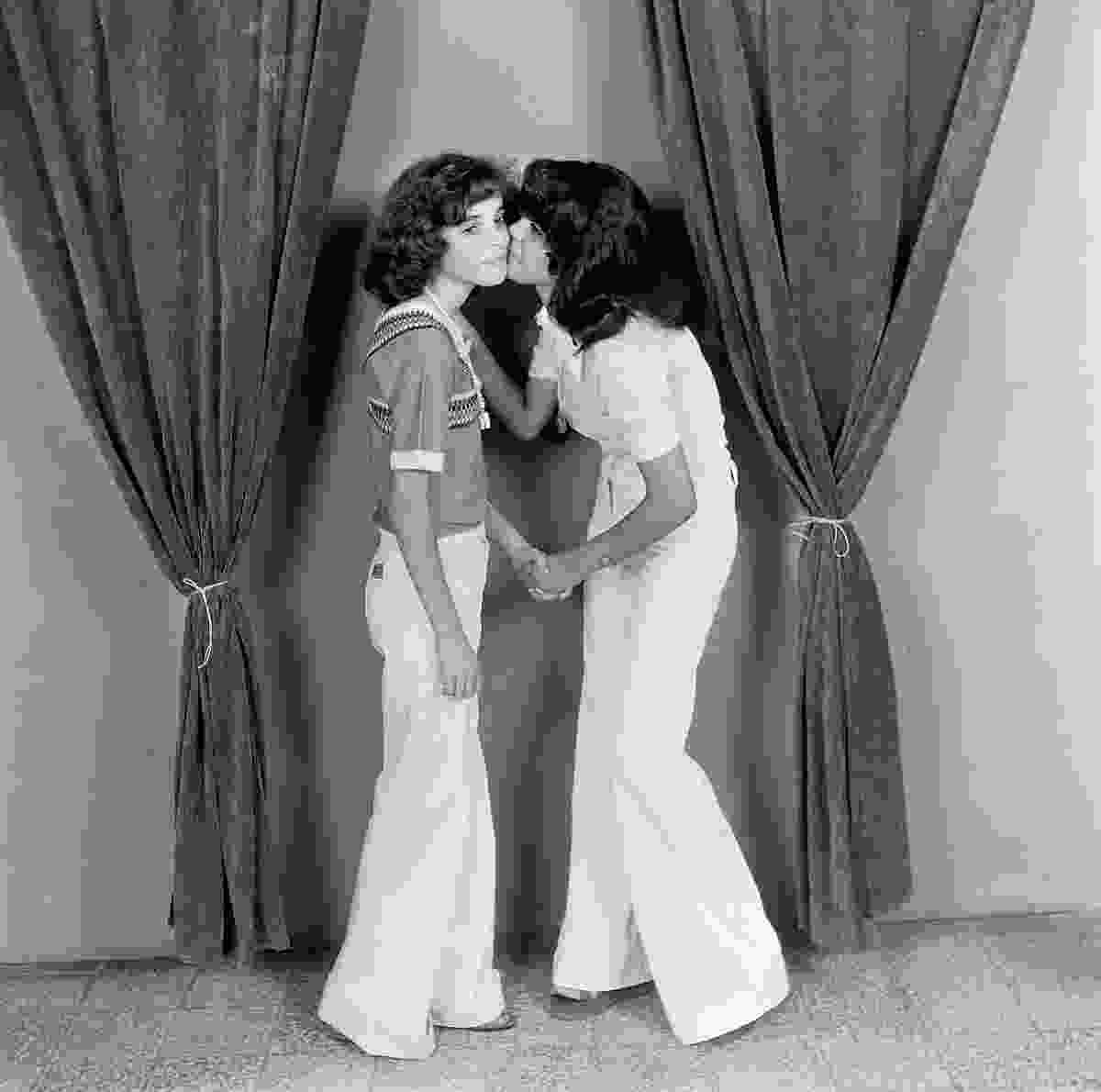
With their scarves wrapped in a cross under their armpits, the resistance fighters stare out directly at the camera. Madani offers an explanation, as he does about all of the work: “These are Syrians… . They used to come unarmed to the studio.” He began taking photographs of the population of Saida in the 1940s. Perhaps the high point came in the 1960s and 1970s, and after the Israeli invasion of Lebanon in 1982, business started to decline. Madani worked to produce imagery that was acceptable in every way to the sitter, the parent, the lover; he would cover every conceivable physical blemish and sacrifice the useless image of truth in the production of an elaborate facade. How fascinating to go right back to the surface of a photograph, with the negative scratched and doctored, to remove an unwanted, unmentionable ex-wife! Madani would retouch work by other photographers, as well, to remove the occasional crossed eye, for instance. Girls kissing, boys hugging, a loss, new love, good friendship are all conveyed with equal attention, intensity and purpose.
Probably the most unusual aspect of the exhibition is that this mass of imagery is accompanied by a series of accounts written by the photographer. The retrospective nature of this signifies that he is commenting and explaining in the present about something in the past: it would be difficult to see, concentrate, and understand otherwise. Here, a practical characterization of a set time and state can combine with light touch to reveal how functional the work is; in any other circumstance it would not be at all desirable for such a level of narrative, such anecdotal account, but this works in a different way. Time is held still but also consciously revived and commented upon.
The mass of work means that patterns evolve quickly, and gaining a knowledge of the general project makes concentrating on the particular individual very difficult. The runs of images include a young women holding the back of a chair; naked boy babies on a sheep skin rug; women and children touching the dial of the studio radio; Palestinian “resistance fighters” with their guns; young girls standing around a table with table cloth; a Palestinian girl writing a letter to her lover. All start to produce slight shifts in pose and a movement across the surface — with the radio here, the radio there, the pattern of the table cloth, or a jauntily set hat. The unconscious nature of constructed imagery seems to speak back and create its own rhythm.
Madani’s atelier in the Chehrazade building, which he opened in 1948, was one of the first functioning “drop-in” photographic studios in Saida. Madani worked here, in his parents’ home, and in the homes of families. With such an equal dose of fiction and fact inherent in the nature of the work, the actual place where the photograph is taken is of little significance. To Madani, it matters much more that the place be accessible. He describes his studio as perfect, as “appropriately discreet, large, and inexpensive”; women could come in and leave unobserved, and his clients could pop in over and over again, often late at night, after having seen a movie, for instance.
The exhibition, part of the Photographers' Gallery's Mediterranean season, was jointly organized by Akram Zaatari of the Fondation Arabe pour l'Image and British curator Lisa Le Feuvre. Madani's collective portrait of a particular society over half a century exemplifies the interdependent, close relationship between imagery and desire.
Hasham El Madani, Anonymous, early 1970s. Studio Shehrazade. Collection FAI
Crisps or chips? It’s a question of taste. Or is it? If you blindfolded your average shopper and fed them a Walkers Crisp from the UK and a Lay’s Potato Chip from the USA, would the difference be more legible than the miniscule difference in brand logos?
We don’t have a dog in that fight. In the Gulf we say snacks.
In the Arabian Fishbowl (sorry, Persian Gulf) (sorry! Arabian Gulf), the cultivation of potatoes is a comparatively recent development. (Slightly more recent than the nation-state, but not by much.) In 1976, the SPDP (Saudi Potato Development Programme, of course) established a co-operative with the Netherlands to grow trial crops of Spunta, Ajax, and Diamante from Ha’il to Hufuf. Until then, the only tuber known to the Arabs had been Fugaa’, or desert truffle, an elusive but tasty treat. (Especially, it turns out, when roasted and salted.)
The graft took, and the taste for potato crunchies in the Gulf was stoked. Decades on, there are dozens of brands arrayed around the region, each with its partisans and apologists stoking national pride or exciting international longing, packing their spuds with flavor-crystal combos and sealing them into the shiniest foil laminates from Qingdao. Soft power with a crunch, you might say. (And a sprinkling of flavor-dust.) As a tween in Doha the only thing I knew about Oman was that they made the best potato snacks. Indeed, it’s difficult to imagine cracking a carton of Laban Up without a bag of Chips Oman.
Bidoun asks a not-so-random control group to taste-test a selection of potato snacks (and an arresting panoply of corn products) hand-picked from a variety of Arabian Gulf states.
We wonder:
Are Kuwaitis as naturally nice as their NICE brand natural potato chips?
Why do Saudi’s XL-brand salty snacks sport a distressed blue-jean theme?
Do discerning Qataris prefer “Mexican Cheese” or “French Cheese”?
And what do Hot & Sour BOY chips really tell us about Oman?
Let’s find out.
—Sophia Al-Maria
#1 — NICE: NATURAL POTATO CHIPS in CHICKEN and PAPRIKA FLAVORS, from KUWAIT
Michael C. VazquezThe Chicken does not inspire confidence.
Anna Della SubinIt smells like barnyard.
Yasmeen AlsudairyIt tastes like a bouillon cube.
VazquezI think it smells like a potato chip.
Sarah FanIt smells like a barnyard further away from your nose, and then when you get it in the nose it smells like a potato chip.
Sukhdev SandhuThis presents a challenge for the researcher, because who, when they are eating crisps, puts their nose into a package of crisps? It would take a really committed, politicized, olfactory anthropologist to do that.
VazquezI think it may turn out that capturing the essence of a bird and putting it in a chip is not going to smell fresh, under any circumstance.
Andy PressmanI think there is no chicken flavor at all in this.
SandhuIt’s chicken yet it has a bunny on the logo.
VazquezI don’t taste the bunny.
SandhuThe bunny is a kind of illegal immigrant.
Alsudairy[reading the bag] “It’s NICE to be a part of the family. It’s NICE to be NICE and to be proud of it.”
SandhuYou would think, with the gold package, that it would be more succulent or lush. Instead it’s kind of arid and desultory.
Alsudairy[opening the Paprika flavor] This one smells like palm trees. It smells like home.
Sandhu[reaching for the bag] Can I have a bit more? The colors are sort of electro-clash.
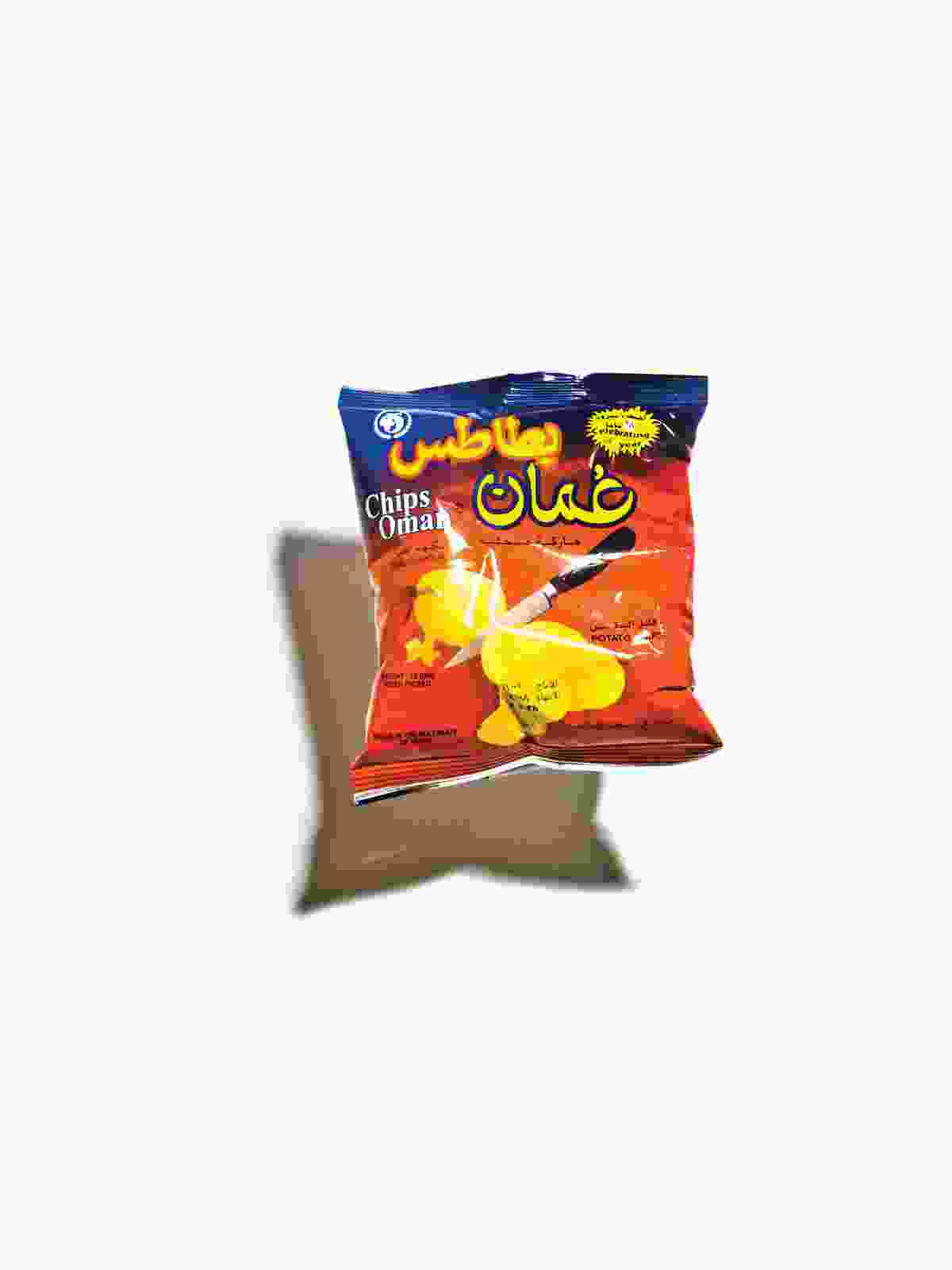
#2 — CHIPS OMAN in CHILI FLAVOR from OMAN
FanThese are kind of delightful.
VazquezThis whole endeavor began when Sophia al-Maria confessed that when she was a child, she knew nothing about Oman except that it is the place where delicious chips come from.
E.P. LicursiTo me it smells exactly like raw potatoes. It’s nice but unseemly for a chip.
SandhuLook, “This product is sold by weight. A certain amount of air is packed in each bag to act as a cushion against breakage.” That is like a “get out of jail free” for any crisp manufacturer. It’s not that we are skimpy or mean — it’s to prevent breakage.
VazquezBut there is something quite violent about the scene on the package. [A raised knife slices through a potato.]
SandhuThe package looks like capital punishment. With a kitchen knife.
FanCapital punishment begins at home!
SandhuThe logo looks like Santa Claus on top of a sheep.
AlsudairyNo, it’s the Sphinx and Big Bird.
VazquezThe magic combination is supposed to be Chips Oman and some yoghurt drink? Laban Up?
AlsudairyOh, that’s so good.
VazquezWait, these are chili flavor! It just hit me.
PressmanI taste it.
SandhuThe initial descent, because I think that is the technical word when you bite into a crisp, is a bit like opening up a battered old suitcase belonging to your grandparents. Old smells emerging, even though the clothes are sort of skanky and stinky — it’s a loving descent.
VazquezI think that’s another way of saying it smells like a potato.
LicursiExactly.
VazquezIt’s a bit early, but I’m nearly ready to say, “Sorry Kuwait.”
#3 — XL: FRESH POTATO CHIPS, SALTED and HOT varieties from DUBAI
AlsudairyWow. They’re made in Ha’il, a Bedouin city close to Iraq.
SandhuIt conveys the sense that it’s the early days and there’ll be oil forever. But you know, it’s just going to get depleted really quick and there will be a sense of real sadness very soon.
VazquezIs your point that we should go buy some American potato chips right now to cushion the blow?
PressmanI love how this package is designed to look like the back pocket of a pair of blue jeans.
VazquezOne flavor for when you’re wearing green jeans and one for when you’re in your blue jeans.
PressmanWhat I like is that it’s not the bag that is in the pocket, but the chips themselves. I am actually meant to stuff these in my back pocket and just pull them out throughout the day.
VazquezYou could never sit down.
PressmanThe flavor profile is flattened in all these chips, actually.
VazquezWhen you say flattened do you mean nuanced or lame?
PressmanJust flattened.
SandhuAre you saying these are MP3 chips, with a kind of taste compression?
FanAnd you only want lossless chips?
PressmanI do. But what is Antioxidant TBHQ? [Reading the list of ingredients] The cognitive gap between what this wants to tell me and what it tastes like is as far from what it offers as possible. That really could be a bag of potatoes.
SandhuIf this is natural, it makes you pine for artificiality.
AlsudairyThere is nostalgia for greenery, which the country lacks. This is something you would never find this scene. This is deception. Trying to be hip — no one would ever wear this in Ha’il. No one would wear denim and just walk around. This is like utopia for them… or dystopia, I don’t know. But I know this is not Ha’il, this acid-washed denim.
SandhuWhat areas of the world would you say this reminds you of?
VazquezLet me smell it again.
SandhuIt’s a bit like airport breath, isn’t it? You’ve been traveling many hours, you have a stopover, you come back and you stink in a boring way, and you have to go to a bathroom and brush up. These are crisps that have not had toothpaste.
LicursiOne thing I noticed in all of these is that each chip has a different distribution of powder: the second one tasted completely different from the first.
VazquezThat happens with Doritos, sometimes you get a really orange delicious Dorito and sometimes you get a shitty nothing Dorito.
SandhuIs it like the veil? It seems conformist on the outside but underneath there is far more tang and vitality going on.
VazquezAre we talking about Doritos?
SandhuNo, about the Phenomenon of the Second Crisp.
#4 — SALAD SNACK from the UNITED ARAB EMIRATES
Vazquez[reading packaging] It’s for an Emirati audience, the flavor is salad, and they asked the Koreans to manufacture it? I’m a little afraid.
SandhuCan tape recorders record radical skepticism? Because he looks…
LicursiHave you ever had those dreadful healthy puffs… not the Pirate’s Booty but the Veggie Sticks? It reminds me of that in terms of blandness. Vague saltiness and texture.
SandhuThe vegetables on the bag look like a child’s safety poster.
PressmanWhat I want is for it to absorb more of the moisture in my mouth.
SandhuIt’s not Pirate’s Booty, it’s Accountant’s Booty.
AlsudairyThe packaging looks honest.
SandhuThe instructions speak with a forked tongue…
LicursiIs it secretly Beef Fondue flavor?
VazquezWait, they are good at that in Korea!
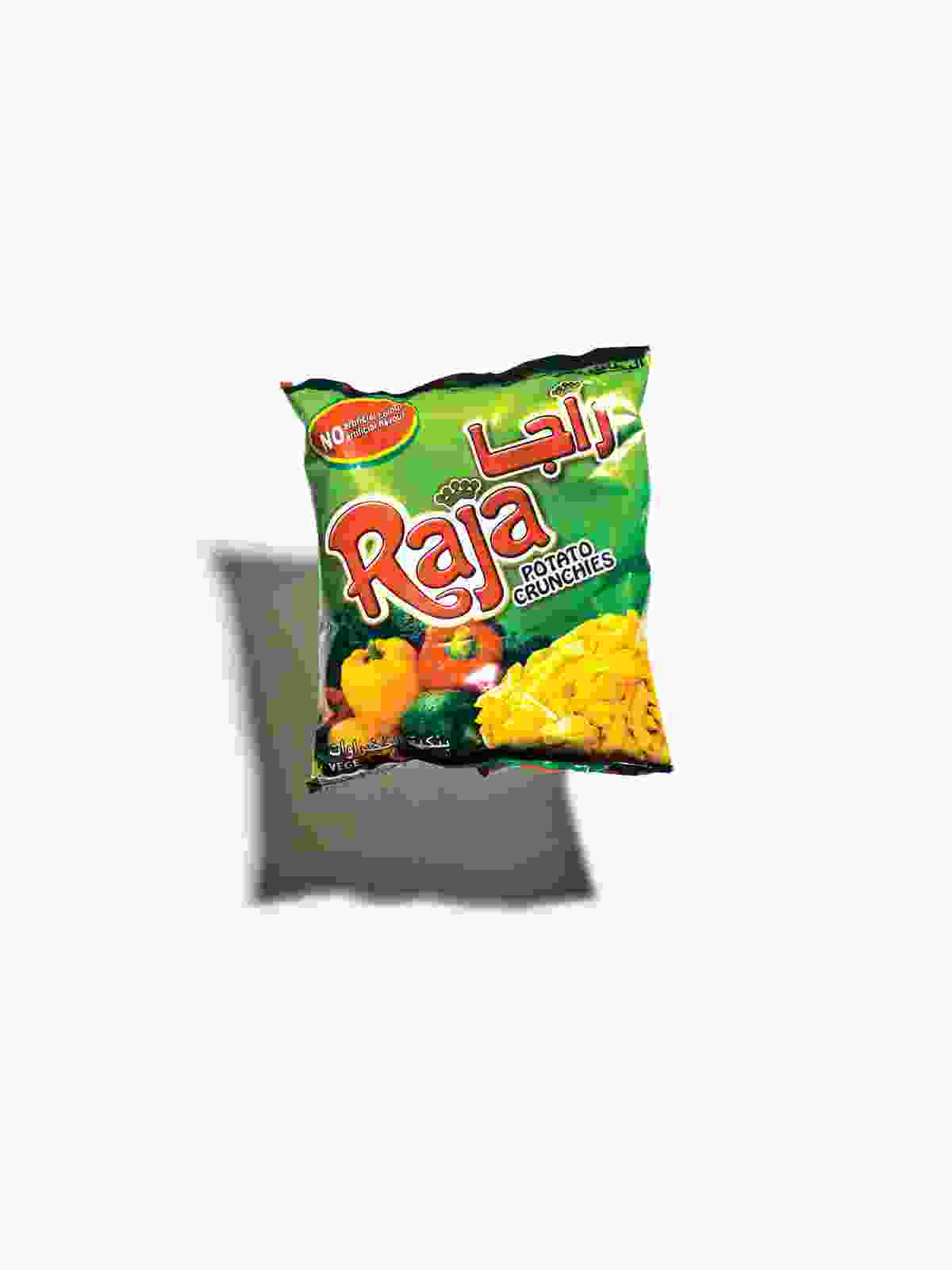
#5 — RAJA POTATO CRUNCHIES in VEGETABLE and SALT & VINEGAR flavors from the KINGDOM OF SAUDI ARABIA
SubinThey look like decomposing penne.
VazquezThis looks like you turned over a rock.
SubinIt’s larval.
VazquezThey say they are the number-one potato crunchie, but it turns out words have no meaning.
SandhuThe expression on your face says “mass grave.”
VazquezThese snacks are extruded.
SandhuFailed infrastructure.
AlsudairyPeter, your face!
SandhuIt’s like a really expensive shopping mall.
VazquezPlease: everyone try one. So we can all be on the same page.
PressmanIt is not unlike an uncooked ramen noodle with the packet stuff spread on it.
FanI’m tasting salad.
LicursiI’m tasting cheap salad dressing.
VazquezI’m sorry, what’s the difference between salad and cheap salad dressing?
LicursiYou’re right, you’re right.
SandhuIt’s like a massage.
#6 + 7 — EMIRATES POFAKI versus QATAR PAFKI
SubinEmirates Pofaki: “Cheese Coated Crispy Corn Curls. Winner of the 17th International Food Award in Barcelona.”
SandhuIt’s almost like a cheesy ball.
VazquezIt’s a Cheeto.
FanIt’s a Cheez Doodle, my friend.
VazquezThis is unfortunately as close to packing material as it is to a treat.
SandhuIt’s like the taste of indifference.
VazquezQatar Pofaki — these are the worst.
SandhuThese are the taste of the new economy.
LicursiWeird corn flavor.
SandhuI think it tastes like golf.
#8 + 9 — FUNKEES Wild BBQ Curry and FONZIES Original Cheese Corn Snacks, both from Malaysia
SubinNow we have two Malaysian imports, Funkees and Fonzies.
SandhuSo far I feel like we have not encountered any fundamental otherness of crisp. There has basically been no topography.
PressmanYou haven’t been startled, is what you are saying.
VazquezI was startled by how good the Chips Oman were.
PressmanBut was that the startle of familiarity?
VazquezIt didn’t taste like anything else I knew…
AlsudairyOman has always been ambiguous. Look at its First Lady…
VazquezThe wild in Wild BBQ Curry is cumin, I think.
LicursiI don’t taste cheese at all.
VazquezMaybe it’s mislabeled?
PressmanOh it’s terrible! The aftertaste of this thing is actually wet sock. (I’m going to have one more.)
AlsudairyIt’s like the evil sister of blue cheese.
FanThe word gout is here on the bag.
LicursiFunkees — A+ for shape.
AlsudairyIt’s so eighties.
SandhuI wonder — if MIA had her own fashion label, would she design something like this?
VazquezThis is the first snack we’ve tried that I think could make me sick. It has too much going on, in a way. It could be toxic.
SandhuLike globalization. Oh, they also have Funkee Chicken.
AlsudairyThis is the naughty chip.
#10 — SAFARI GRILLS from DUBAI
SubinThese claim to be one of the oldest but most beloved flavors. Since 1985.
AlsudairyThe literal translation from Arabic is meshes of potato.
PressmanSafari grills? All this time I was waiting for safari girls.
SandhuSephardic girls? [laughter]
VazquezAre they meant to look like the front of your Jeep when you’re on Safari?
SandhuNo, no. I think they’re a bit like burqas.
VazquezI cannot even imagine what you are seeing right now.
SandhuBy eating this we are helping to conserve nature. There is an abandoned elephant telling YOU to keep YOUR city clean.
PressmanIt tastes less like potato than anything else we have eaten today.
SandhuPost-potato?
PressmanThis image looks like something I would have drawn when I was thirteen.
SandhuIt’s like a UFO in the shape of a saltshaker. No! It’s like a thought bubble.
FanIs this an existential question, like, which came first, the saltshaker or the chip?
VazquezIt is! I would like to think it’s the chips dreaming of being salted, since they’ve clearly not been salted enough. If I can say one thing about the entirety of all these chips: the stuff is not seasoned well.
SandhuThere is a sort of genetic fundamentalism…
FanDubai has so many British ex-pats, you would think they’d have livelier crisps market.
VazquezYou know, as PR for a region, this is terrible.
#11 — ALADDIN PIZZA CRUNCHIES from DUBAI
SubinThe pizza on this package comes complete with nightmarishly dripping cheese.
PressmanOn that green background to make it look… Oh wait, that’s lettuce!
LicursiI thought it was some kind of weird, cosmic, planetary swamp.
FanIt’s shaped like a lotus root.
VazquezIt tastes like frozen pizza.
PressmanThis is a very Lovecraftian pizza. Look at its dripping. WOW. What they did is incredible! They traced the outline of the pizza and then in Photoshop — they extended it for the drip. They would have been better off using yellow crayon.
SandhuIt’s awful!
PressmanIts most potent moment is when there is nothing left, and all you have is a presence that is not a presence.
SandhuIt’s melancholia…
PressmanIt haunts the edges.
VazquezIt tastes dead but dreaming.
SandhuThe mourning lasts longer than the relationship.